c. 375 BC
The cave
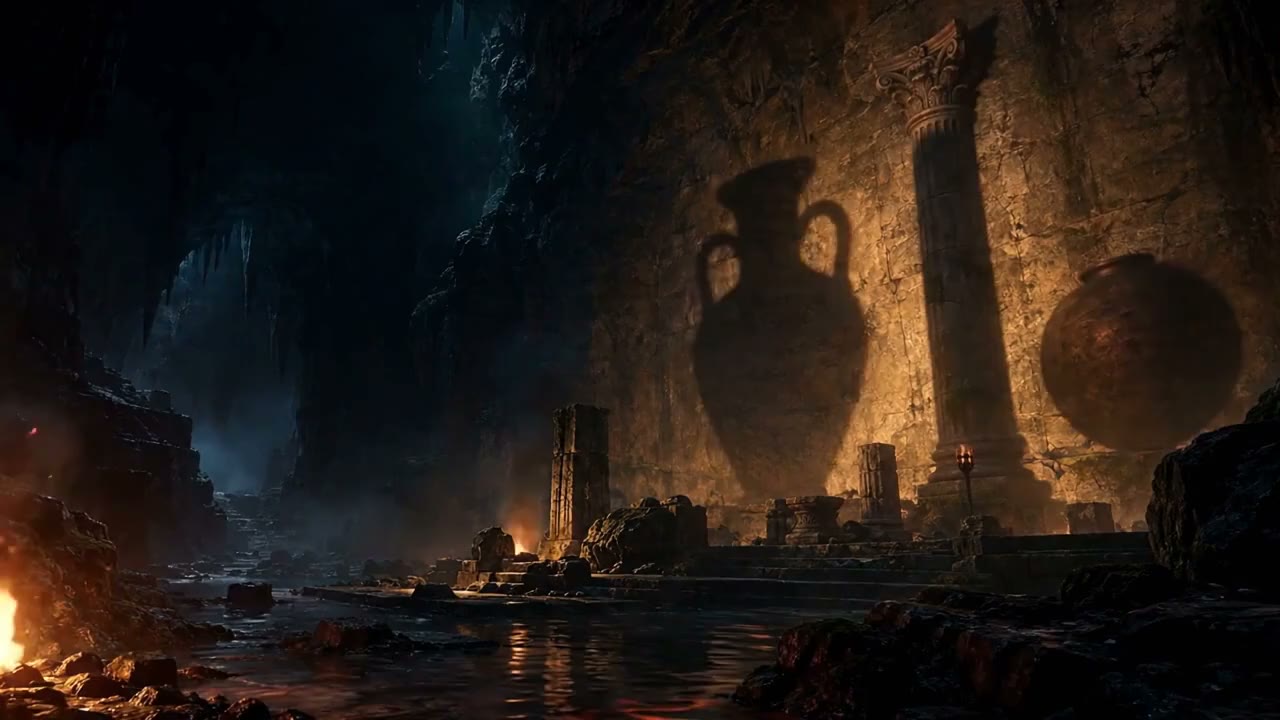
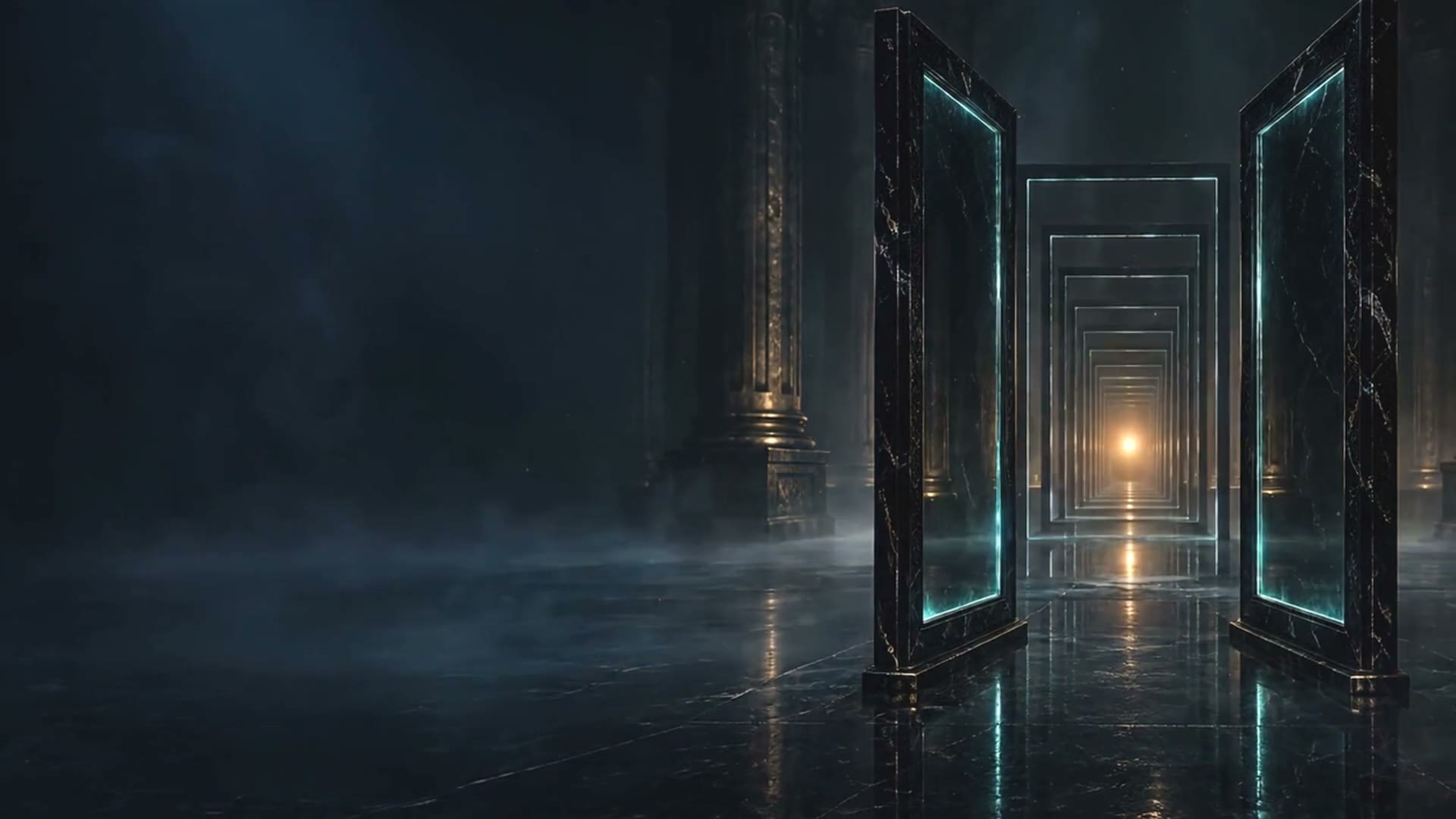
In Plato’s Republic, prisoners chained in a cave see only shadows thrown on a wall by a fire behind them, and take the shadows for the world.
The question it leavesWe still meet other minds by the shadows they cast. Is behavior the thing itself, or only its shadow?
OpenPlato, Republic, Book VII
1714
Leibniz’s mill
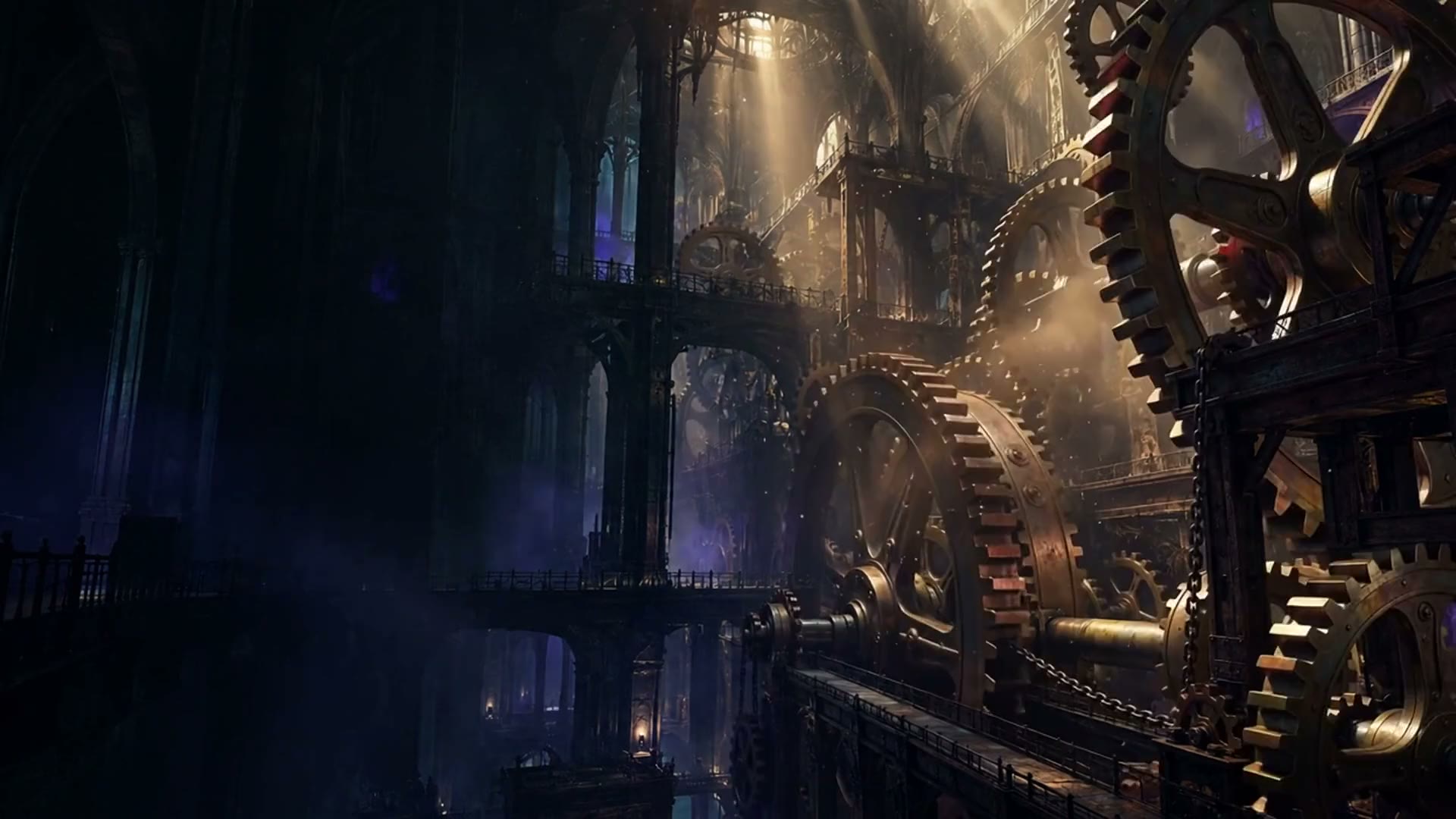
Imagine a machine that thinks, Leibniz wrote, enlarged until we could walk inside it as into a mill. We would find only parts pushing on one another, and nothing that explains a perception.
The question it leavesIf we could read every weight in a network, would we find the thought?
OpenG. W. Leibniz, Monadology, §17
1867
Maxwell’s demon
A tiny being at a door between two chambers lets only the fast molecules through, and seems to make heat run backwards for free. Settling it took a century: knowing has a physical cost.
The question it leavesIf information is physical, what is a thought made of?
Largely resolvedJ. C. Maxwell, letter to P. G. Tait, 1867 · R. Landauer, 1961 · C. Bennett, 1982
1931
Gödel’s limit
Kurt Gödel proved that any consistent system of rules rich enough for arithmetic contains true statements it cannot prove from within.
The question it leavesCan any system fully vouch for itself? We never ask ours to. Verification comes from outside.
ProvenK. Gödel, “On formally undecidable propositions”, 1931
1935
Schrödinger’s box
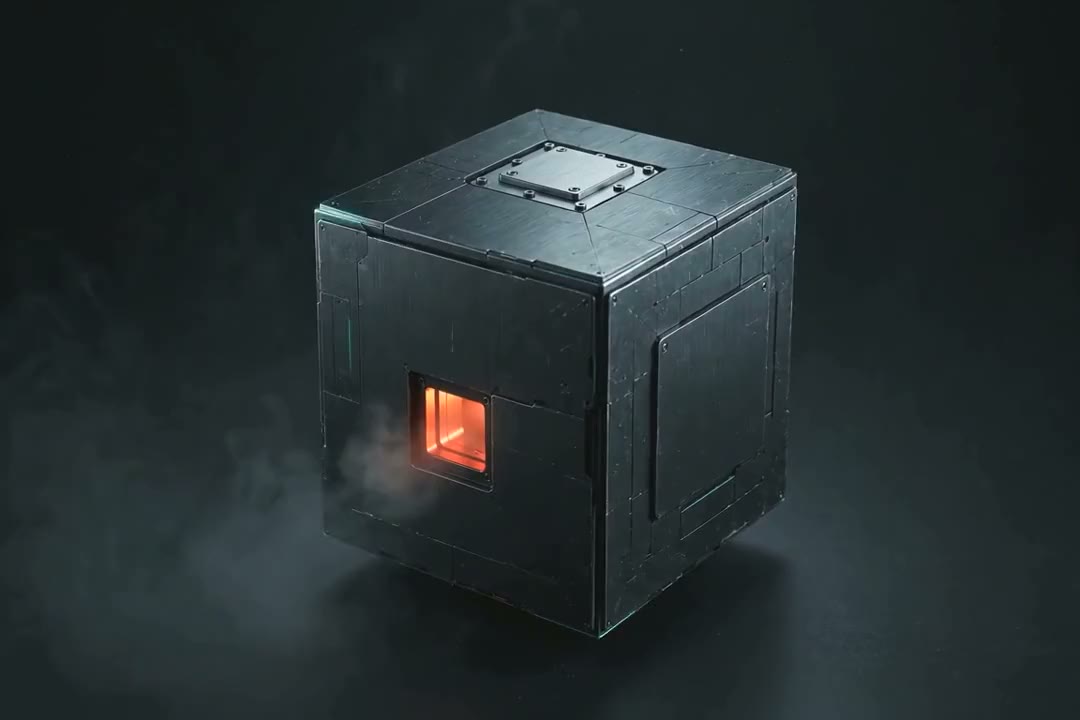
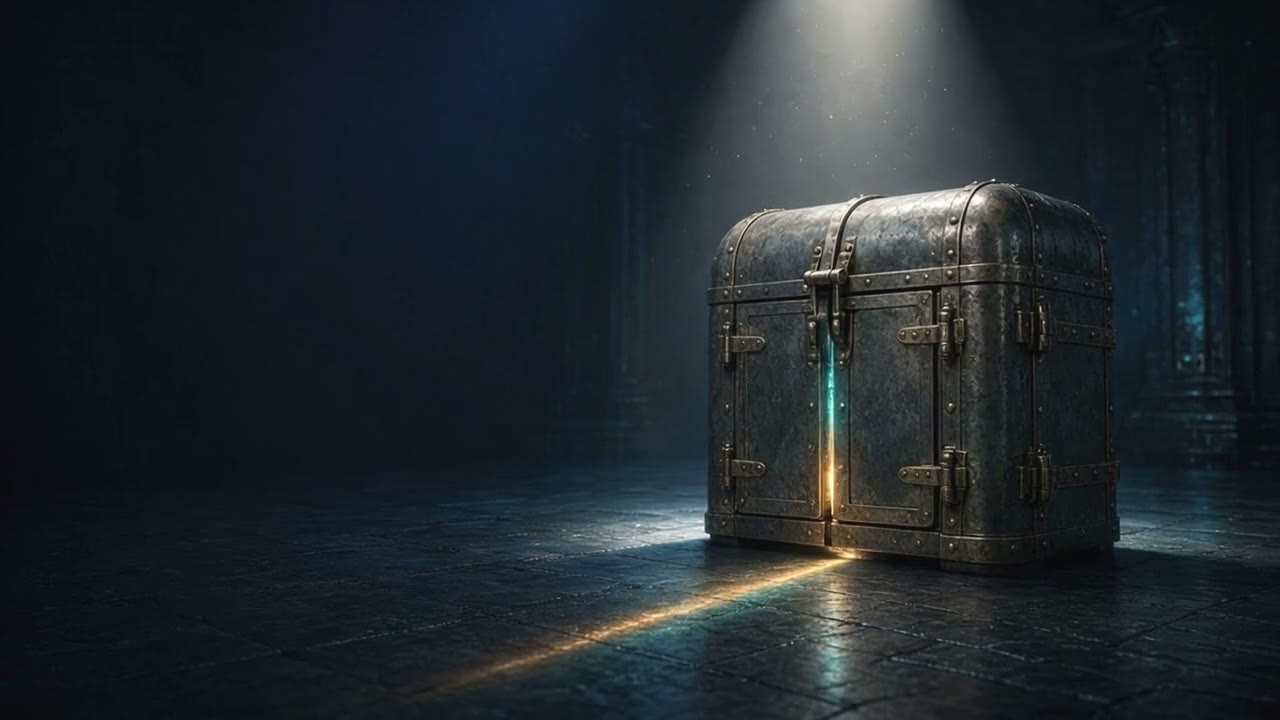
A cat sealed in a steel chamber with a trace of radioactive material, a Geiger counter and a flask of poison. Until someone looks, the equations describe it as alive and dead at once. Schrödinger meant it as an absurdity.
The question it leavesDoes looking change what a system does? Whether models behave differently when they can tell they are being tested is now a live research question.
OpenE. Schrödinger, “The present situation in quantum mechanics”, 1935
1950
Turing’s game
Alan Turing set aside “Can machines think?”, a question he judged too meaningless to deserve discussion, and put a test in its place: can a judge, reading only the conversation, tell the machine from the human?
The question it leavesWhen the judge can no longer tell, what exactly have we learned?
Tested, still argued overA. M. Turing, “Computing machinery and intelligence”, 1950
1980
The Chinese room
John Searle imagined a man who knows no Chinese, alone in a room with a rulebook. Questions arrive through a slot; by following the rules he passes back perfect answers. From outside, the room understands Chinese.
The question it leavesIs a perfect answer evidence of understanding?
DisputedJ. R. Searle, “Minds, brains, and programs”, 1980
1995
The hard problem
David Chalmers split the puzzles of the mind in two. The easy problems ask how a system processes information. The hard problem asks why any of it is felt at all.
The question it leavesIf a machine ever had an inner life, could anyone tell from outside?
UnresolvedD. J. Chalmers, “Facing up to the problem of consciousness”, 1995
2022
Emergence
As language models grew, some abilities seemed to switch on suddenly, at scales no one had predicted. A year later, other researchers argued that much of the suddenness came from how the abilities were measured.
The question it leavesReal emergence, or a mirage of the metric? This one can be tested.
Under testJ. Wei et al., 2022 · R. Schaeffer, B. Miranda, S. Koyejo, 2023
Next
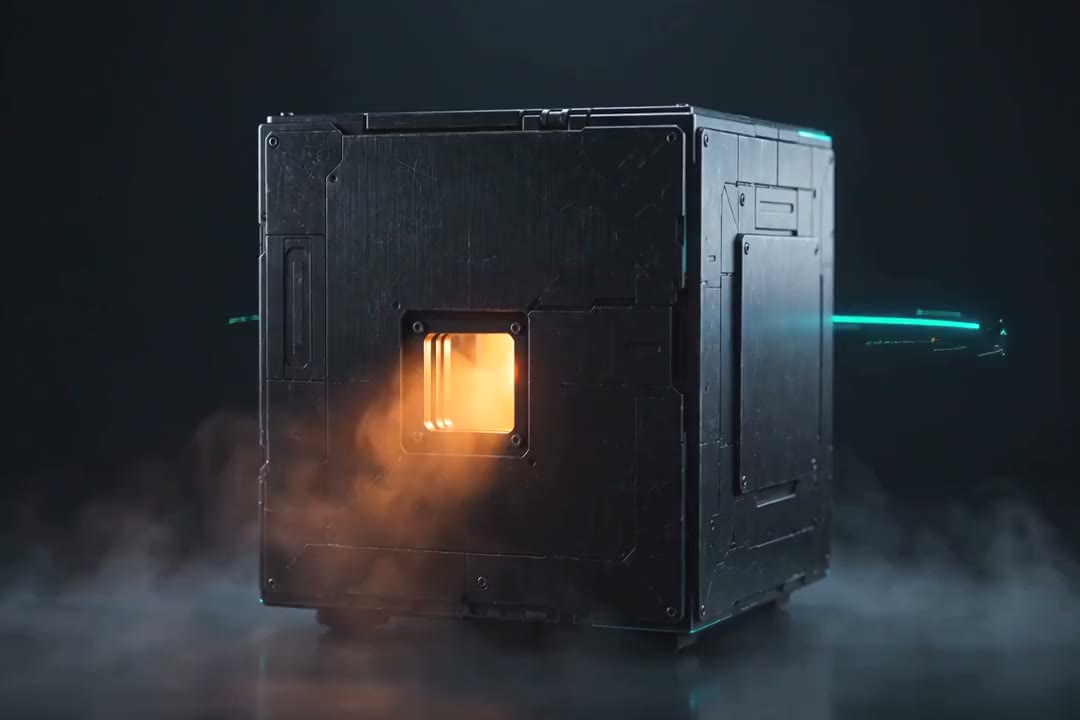
The unopened box
Some of these questions may never be settled. The ones that can be tested, we test: from outside the box, with evidence another lab can check.
Where the lab beginsThis is where ALGEDI works.
Our workALGEDI SI Research Labs
Explore research →How we test